Picture this.
It’s 11 PM. A critical batch process has been running since end of day, reconciling invoices, updating vendor records, flagging exceptions for review. Your team set it up, handed it off to an AI agent, and went home.
By morning, it’s done. Mostly.
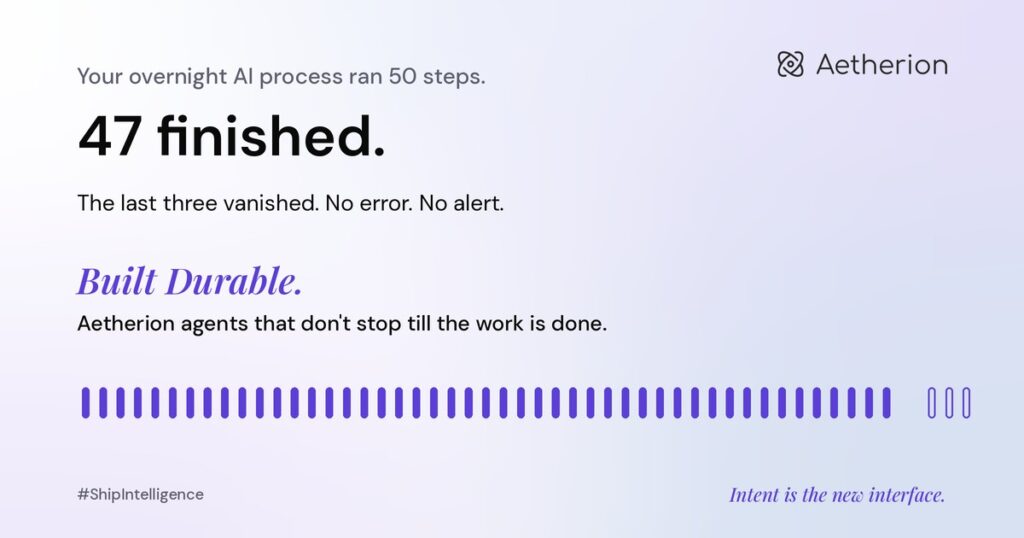
47 of 50 steps completed. The last three? Gone. No error. No alert. Just silence, and a trail of half-updated records that someone now needs to untangle before the day can begin.
This is the moment AI stops feeling like the future and starts feeling like a liability.
The Promise Was Simple. The Reality Isn’t.
When AI agents first arrived, the mental model was clean: give it a task, it thinks, it acts, it finishes. Seconds. Maybe a minute. The demos were impressive. The benchmarks were encouraging.
What the demos didn’t show was a workflow that needed to call three external systems, wait for a compliance check, hold for a manager’s approval across time zones, then write back to the ERP, all without anyone watching.
That’s not a 60-second task. That’s a process that lives in the real world, where APIs go down, tokens expire, approvals take time, and systems have bad days.
These agents weren’t built for that world. They were built for the demo.
They hold their state in memory. They assume the environment will cooperate. The moment something unexpected happens, a timeout, a rate limit, a network blip, they don’t adapt. They stop. And when they stop, everything they were holding disappears with them.
You’re left with the worst of both worlds: a process that started automated and ended manual. Except now you don’t know where the line was.
What “Failing Halfway” Actually Costs
It’s easy to look at a failed agent run and think: okay, we restart it. But the real cost isn’t in the restart.
It’s in the audit, figuring out what actually completed before it died. It’s in the data cleanup, reconciling what was written to production systems versus what wasn’t. It’s in the trust that erodes quietly after the second incident, then the third, until someone senior says “let’s just do this manually,” and the AI initiative quietly dies.
This is happening in finance teams, operations teams, and compliance functions at companies that are otherwise serious about automation. Not because AI isn’t capable, but because the infrastructure underneath it wasn’t built to last.
How Aetherion Thinks About It
At Aetherion, we started from a different assumption: failure isn’t an edge case. It’s inevitable. Build for it. Build durable.
That shift changes everything about how you design an agent platform.
Every agent running on Aetherion checkpoints its progress as it works. Not at the end, but continuously, at every meaningful step. If a process is interrupted for any reason, the agent doesn’t restart. It resumes, from exactly where it left off. The work already done stays done. Nothing is replayed. Nothing is lost.
When an external system goes down mid-run, Aetherion doesn’t panic. It waits, retries intelligently, and picks back up the moment the system is available. Your team doesn’t get woken up. The process just continues.
When a workflow hits a point that needs a human, an approval, an exception, a judgment call, the agent pauses, routes it to the right person, and holds. It doesn’t time out while it waits. When the decision comes in, the process resumes exactly where it paused. The human is in the loop without becoming the bottleneck.
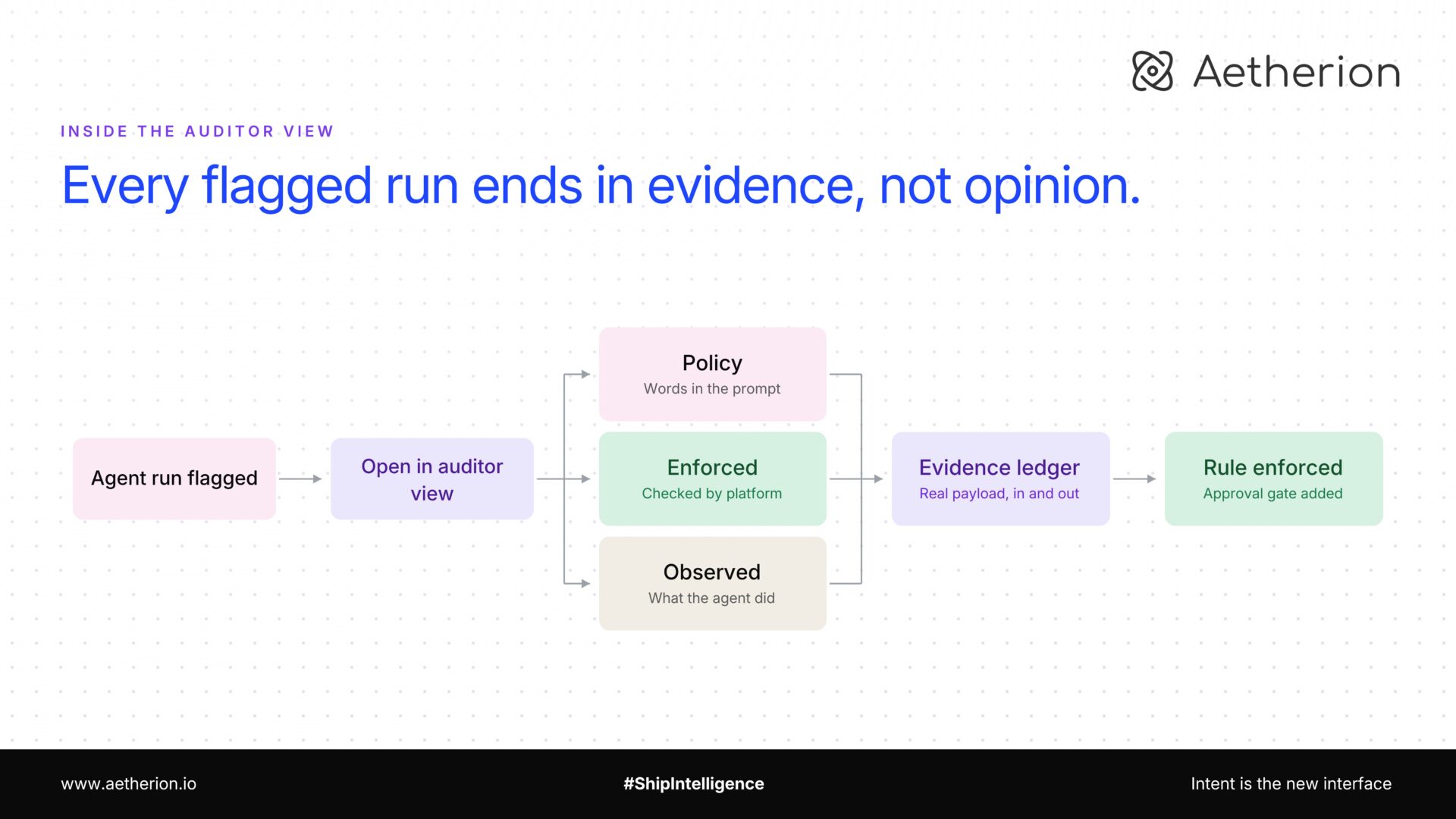
And through all of it, every step is logged. Every retry recorded. Every decision timestamped. If you ever need to know what the agent was doing at 2:43 AM on a Tuesday, you can find out, with full context, not guesswork.
The result is agents that run for hours, overnight, or across multiple days. Without babysitting. Without surprises. Without cleanup.
We Tested This With Football
We wanted to see the difference clearly, not with a finance workflow, but with something anyone could picture.
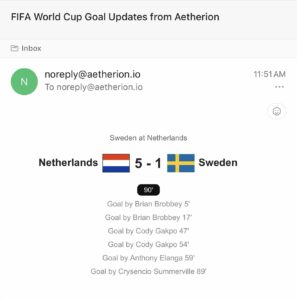
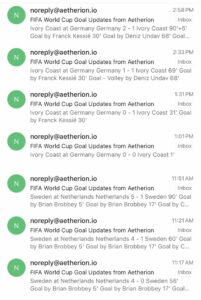
During the World Cup, we set out to build a simple agent: watch live matches, detect when a goal is scored, send an email notification in real time.
Straightforward brief. But demanding by nature. A match runs 90 minutes, a tournament runs weeks, and live sports data is noisy, delayed, and unpredictable.
We built it first using one of the most widely used AI tools available. The agent started. It ran. Then, without warning, it stopped. No error, no explanation, no email. We adjusted prompts, tweaked configurations, tried again. Same result. The tool simply wasn’t designed to hold attention across a long, variable window. When the data feed lagged during a dull patch of play, the agent lost its thread. It gave up.
Then we built the same agent on Aetherion.
It ran through the full match. Through the half-time break. Through the quiet stretches. Through the moments when the data feed stuttered. When a goal went in, the email landed within seconds. When the next match kicked off the following day, the agent was already watching. No one restarted it. No one checked on it. It just kept going.
For the full length of the tournament.
That’s a 90-minute football match. Now imagine a 6-hour reconciliation run. A 3-day vendor review cycle. A compliance process that spans a work week. The gap between what most agents can handle and what your business actually needs becomes very clear, very fast.
Capability Gets You in the Room. Reliability Keeps You There.
The enterprise AI conversation has been obsessed with capability: what can the agent do, what model is it running on, how many tools can it connect to.
None of that is wrong. But it’s only half the question.
An agent that handles complex tasks brilliantly in a controlled environment but fails silently when real-world conditions apply is a proof of concept, not a production system. It gets the pilot approved. It doesn’t survive the first quarter.
The organizations extracting durable value from AI automation have worked this out. They’re not asking “can it do the task?” They’re asking “can it do the task when the world doesn’t cooperate?”
That’s the bar. And it’s higher than the demo lets on.
Trust in AI automation isn’t declared. It’s earned. It’s earned the first time an overnight process completes cleanly and nobody had to check on it. It’s earned when an exception is flagged, routed, resolved, and the workflow picks back up without a single person having to dig in and figure out where things stood. It’s earned when the audit trail exists and actually makes sense.
That’s the work Aetherion is in the business of doing.
What We’re Building Toward
The next frontier for enterprise AI isn’t smarter agents. It’s durable agents.
Agents that can be handed a long, complex, multi-step process and trusted to see it through, regardless of what the environment throws at them. Agents that treat human decisions as part of the workflow, not interruptions to it. Agents that fail gracefully, recover invisibly, and finish what they started.
That’s not a feature we added. It’s the foundation we built on.
Whether you’re automating month-end close, standing up real-time monitoring, or wiring AI agents across your entire operational stack, the promise is the same:
Start it. Trust it. Get the result.
Not halfway. All the way.
See It Run
The processes that matter most to your business are long, multi-step, and full of moments where something can go wrong. That is exactly what Aetherion was built for.
Bring us the workflow that keeps breaking. We’ll show you what it looks like when it runs start to finish. No babysitting. No cleanup.
Aetherion. From intent to impact.
Follow along as we share more of what we’re building at Aetherion. If this resonates with something your team is dealing with, we’d love to talk to you!