How Calfus turned onboarding into a finishing school,
and why the difference matters
Most internship programs end the same way. A cohort arrives, sits through a few weeks of shadowing and slide decks, ships a small project that everyone quietly agrees not to depend on, and leaves. What they take with them is a fond memory of the cafeteria and a rough idea of what the company does, no real ownership on outcomes they ship, and rarely any exposure to the kind of work that actually keeps the business running. They leave knowing the facilities. They don’t leave knowing the people.
At Calfus, that gap was treated as a design problem rather than a scheduling one. The question wasn’t how to fill twelve weeks productively. It was more fundamental: what would an internship look like if it behaved less like an internship and more like a finishing school? A place where skills are forged and tested against live work, under people who are doing that work right now.
That question became Calfus Odyssey. The idea took shape early this year, and the team turned it around at remarkable speed: a complete, AI-led onboarding experience, built with a clear vision of what it should feel like to arrive somewhere new. This cohort is the first walking into the whole of Odyssey, a fully realized world with its own identity and platform. What the choices behind it argue is that readiness comes from being inside the work early, not from watching it happen at a distance.
Real projects, not rehearsals
The default in most onboarding programs is the mock project: a scaled-down, low-stakes exercise built specifically so nothing real can go wrong. It’s safe, and it’s also the reason so many interns finish a program without ever having made a decision that mattered. Odyssey is built on the opposite bet: real projects, for real clients, alongside engineers and coaches for whom this isn’t a mentoring detour. It’s simply their job that week, with an intern now part of it. This cohort has been held to that standard from week one.
The difference sounds small. It isn’t. A mock project can be quietly abandoned without consequence. A real one carries real stakes, real feedback, and real ambiguity, and ambiguity is where most of the learning actually happens. It’s also where most training programs stop, because ambiguity is harder to schedule than a workshop.
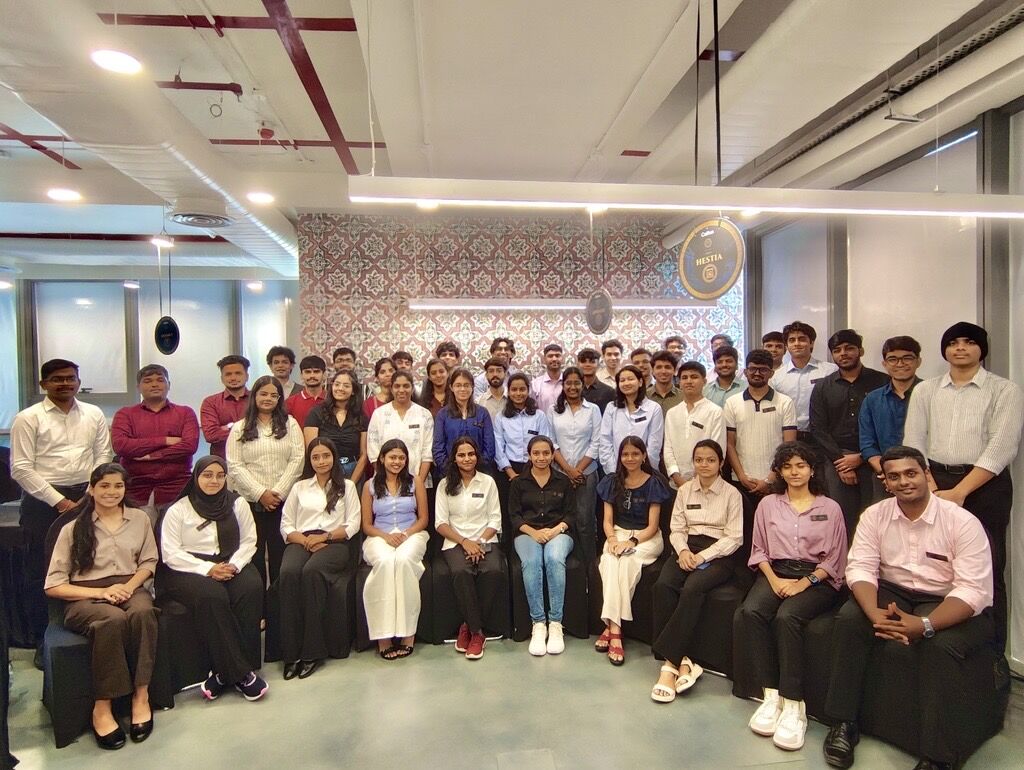
Just as important, the coaches the interns are working alongside aren’t guest speakers who drop in for an hour and disappear. They’re the same people an intern will sit beside if the internship converts into a full-time offer, which means the relationships forming through the program aren’t ceremonial. They’re the beginning of an actual professional network, one interns would otherwise have had to build from scratch after joining full-time.
Before the badge, before the desk
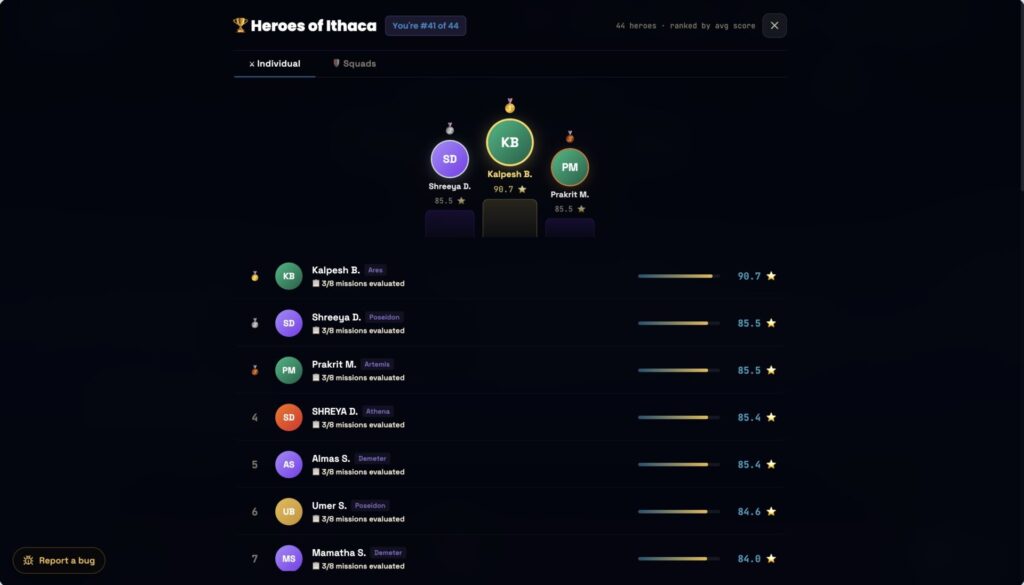
Most companies treat the first day of onboarding as the starting line. Odyssey moved that line earlier. Ahead of their official start date, interns were brought onto a dedicated engagement platform where they could see each other, get organized into teams, and take part in a hackathon before ever setting foot in the office. By the time they actually walked in, they weren’t strangers meeting strangers. They were teammates continuing something they’d already started together.
They knew who was on their team. They knew, roughly, what kind of problems the company cared about and how it liked to solve them. In effect, they’d already met the ecosystem they were about to join, the people, the working style, the unwritten norms, days before anyone handed them a laptop. It’s a small reversal with a large effect: most internships spend their first week building exactly the context this early engagement had already delivered, which meant Odyssey interns arrived with a head start most interns spend weeks trying to earn.
The internship is also paid, and that detail carries more weight than it might first appear to. It isn’t a gesture toward optics. It’s a signal, to interns and to the teams hosting them, that this is being treated as a job rather than a favor done to a student. Paid work invites a different level of seriousness from everyone involved, and the program is built to hold up to that expectation.
Why the mythology, and why it isn’t a gimmick
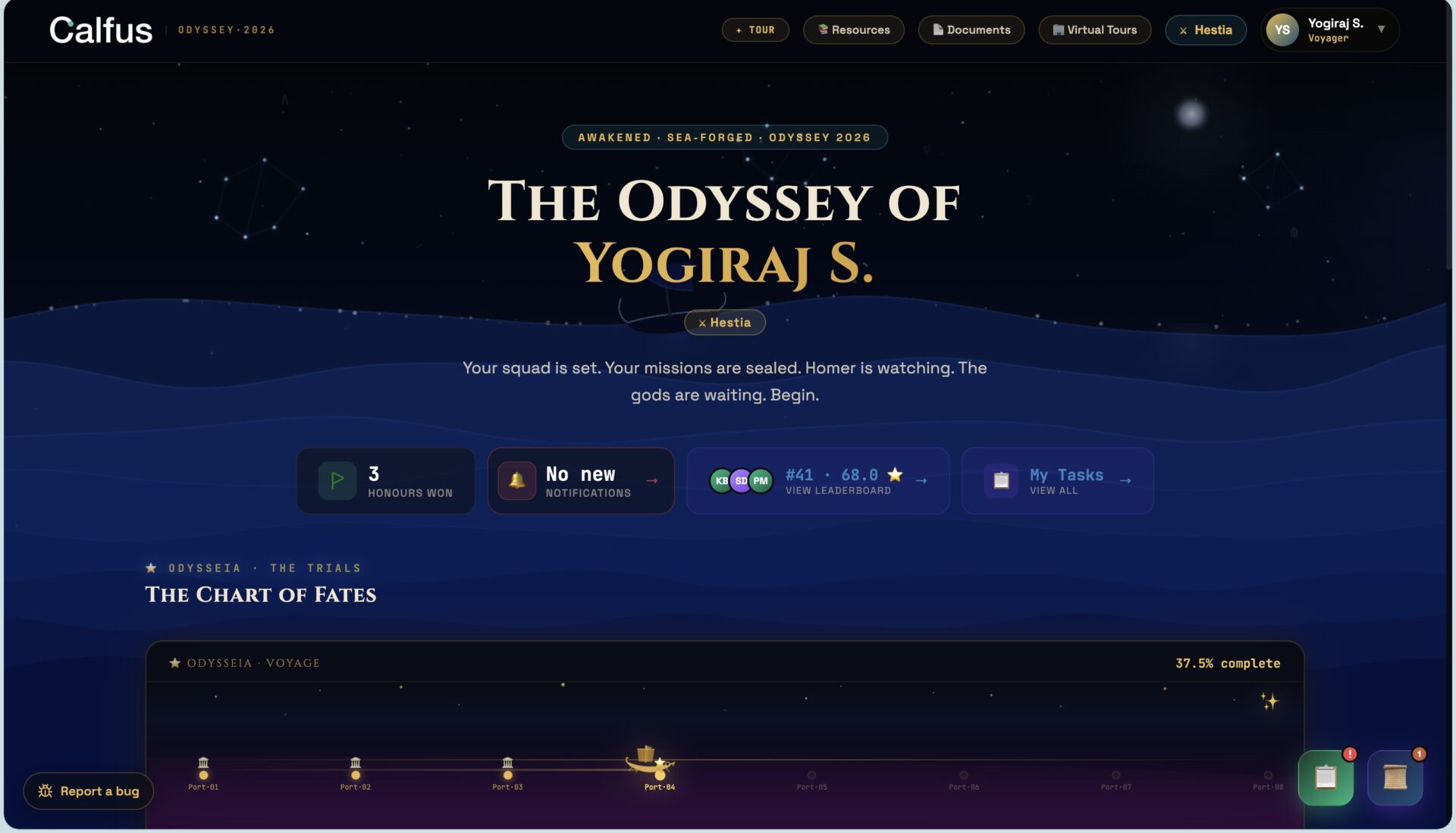
The program’s name isn’t decorative. Calfus Odyssey borrows its shape from Homer’s epic because the metaphor maps onto the experience with surprising precision: an internship is, for most people, a journey into unfamiliar territory, with real risk of getting lost, made survivable by people who’ve made the journey before. Interns are grouped into teams by skillset, and each team is named after a Greek god, not as a theme slapped on for novelty, but to represent the kind of guidance each group draws on, the way a figure like Athena intervened at key moments to steer Odysseus through trouble he couldn’t have navigated alone.
Even the program’s onboarding assistant carries a name, Homer, a small, consistent choice that turns a chatbot into something interns actually reach for, rather than a support form with a friendlier interface. The pre- and post-onboarding tasks follow the same logic, framed as missions and named in keeping with the same world, so the narrative holds together from the first touchpoint to the last rather than showing up only in week one and quietly disappearing.
None of this replaces the substance of the program. It organizes it. The mythology gives a large, mixed cohort a shared vocabulary and a reason to stay curious about what comes next, without tipping into theme-park territory. It works because it’s applied consistently and with restraint, not because it’s clever.
Learning that doesn’t feel like training
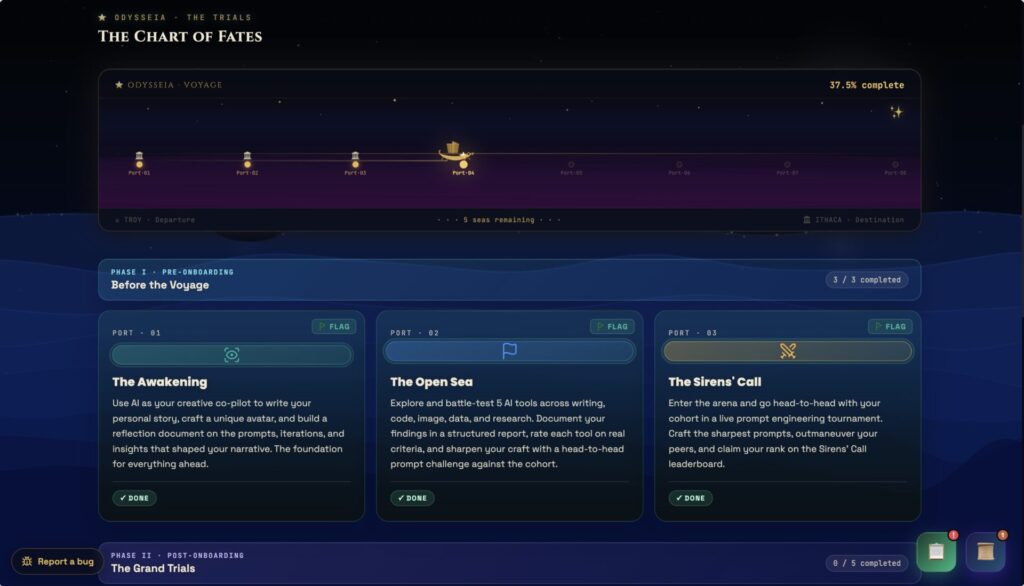
The content itself deliberately avoids the two default modes most onboarding falls into: dry, compliance-style modules on one end, and generic soft-skills workshops that could belong to any company in any industry on the other. Odyssey leans instead on experiential, game-based formats built around the situations interns will actually face, ambiguous instructions, competing priorities, ethical gray areas, the kind of moments that never show up in a slide deck but quietly define how someone performs in their first year of work.
The intent isn’t to entertain, though the format makes room for that too. It’s to put people in front of hard, specific scenarios early, at a point when getting it wrong costs nothing and talking it through openly is still easy, rather than waiting for those same scenarios to show up for the first time on a live client call, with a lot more riding on the outcome.
What it produces
By the time this cohort finishes Calfus Odyssey, the difference won’t only be in what they know. It’ll be in who they know and how early they were tested. They’re working on projects that matter, alongside people who do that work for a living, inside teams they’d already met before their first official day. They’re being paid to take it seriously, and are being asked, repeatedly, to think through problems that don’t come with a clean textbook answer.
Most internships produce alumni who can describe a company from the outside. Calfus Odyssey is built to produce people who already know how to work inside one.