Most attempts at a long-running AI task give you two options: one very smart agent that slowly loses the plot over five hours, or a “multi-agent” group chat where bots talk past each other and you can’t tell afterward who decided what. An agent swarm is a third option. One coordinator writes a plan, hands each piece to a specialist running in its own isolated process, and merges the results. You can trace every part of the answer back to the exact step that produced it.
What is it?
An agent swarm is a system where one coordinating agent decomposes a task, delegates each piece to a separate specialized agent running in its own isolated process, and merges the results, instead of a single agent looping over tools inside one growing context window.
The distinction that matters isn’t how many models are involved. It’s how many independent execution contexts are. A single agent that calls twelve tools is still one context, one failure domain, one transcript that grows until it degrades. A swarm running twelve agents is twelve contexts, twelve failure domains, and twelve transcripts that never see each other.
The agents don’t talk to each other. They share a coordinator, a naming scheme, and a database. Nothing else. Coordination happens through infrastructure, not conversation: a registry table of who exists, a per-agent task queue for routing work, a deterministic ID for every child so the whole run tree is reconstructible from the outside.
A swarm is one task, split into isolated pieces, each run in its own durable process, then merged back into a single answer you can read start to finish.
Who is it for?
Teams doing long-horizon work: due diligence, migration analysis, multi-source research, large-scale document processing. The kind of task that runs for hours, branches into genuinely independent pieces, and is expensive enough that getting it wrong quietly is the real cost. A swarm decomposes it and runs the pieces in parallel instead of chaining them into one five-hour transcript.
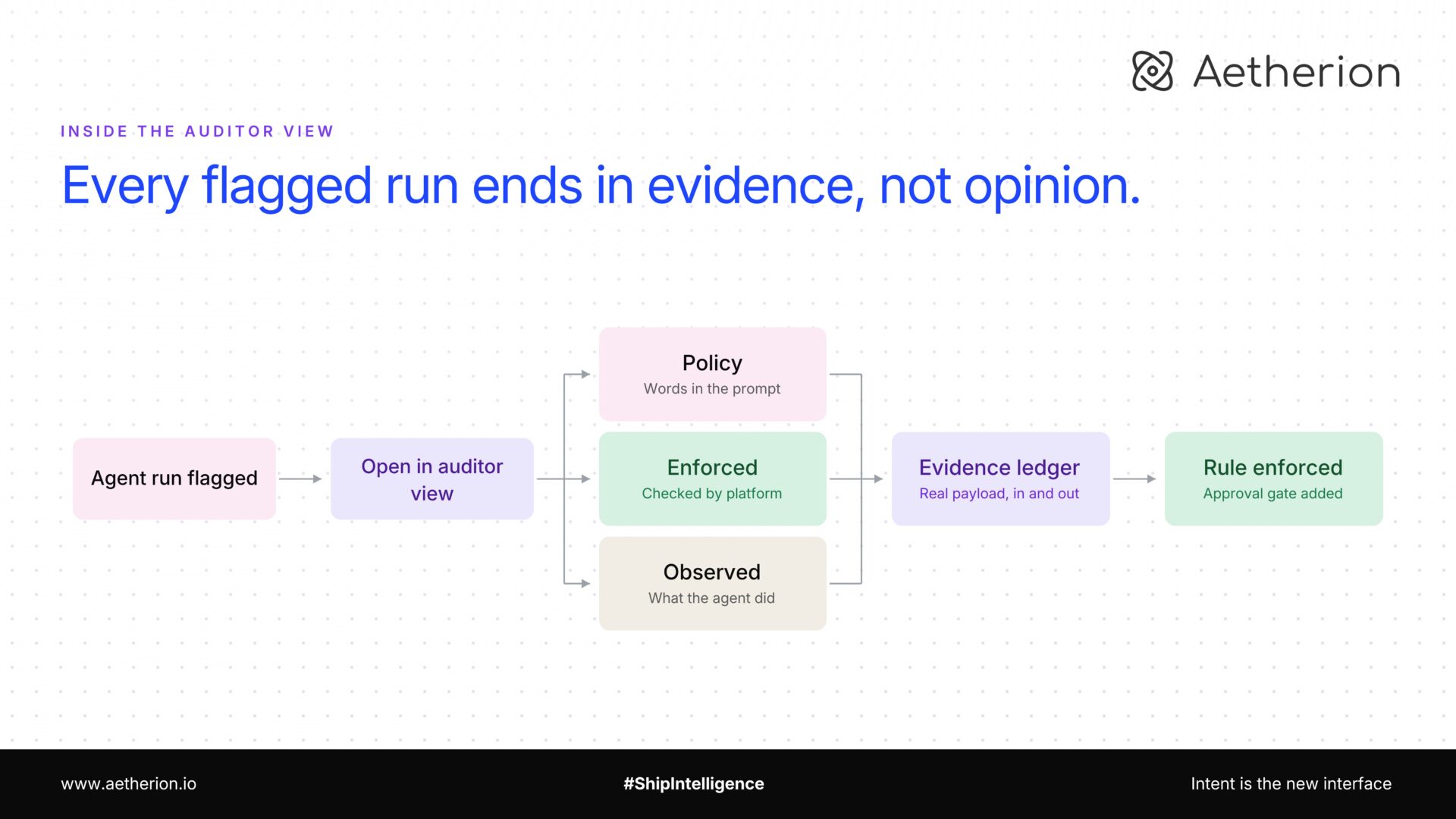
Engineering teams who need the run to be auditable. Every child reports only to the orchestrator, a star topology, not a mesh. You give up emergent peer collaboration; in exchange you get a run tree a human can read at 2 a.m. and see exactly which step failed and what got retried in its place.
And if you’ve ever watched an agent run for an hour, hit a pod eviction or a rate limit, and lose everything, a swarm fixes that specific problem. Each step runs as a durable workflow. A child that finished 90 minutes in is never re-executed; the run resumes exactly where it stopped.
What a real run looks like
Say you want to run due diligence on a company: pull research from several sources, summarize the documents, cross-check the findings, and hand back one synthesized brief. You don’t wire the swarm yourself. You hand the orchestrator the task, and it plans the run.
First, it reads the live agent registry out of the database. The swarm’s capability set is a query, not a hardcoded list, so any agent you’ve deployed and registered is immediately a legal choice. Then it runs two passes: one to extract structure from your request (required capabilities, constraints, success criteria), and one to turn that into an executable plan where every step names a concrete registered agent, its timeout, whether it runs in parallel, and which agent to fall back to if it fails.
Then it spawns. Every planned step becomes its own child workflow on its own worker fleet, so a memory-hungry document agent and a fast summarizer scale independently and can’t starve each other. Each child gets a self-contained payload (its task, its step, its config) and never sees the other children’s work. That isolation isn’t a limitation; it’s the point. It’s why the agent doing hour-four synthesis isn’t dragging four hours of dead ends behind it.
The orchestrator awaits every handle, judges each result, and gives anything that failed exactly one fallback re-spawn against a different agent, with the other results untouched. Then it takes the original task, the plan, and every per-step result and synthesizes the final brief, streaming tokens out to the chat surface as it goes.
None of that required you to script the coordination. It required a registry that knows which specialists exist and a planner that decides which ones this task needs.
Built for how work actually happens
Swarms don’t wait for someone to rebuild them. Deploy a new specialist, register it with a name and a description, and the next planning call sees it as a legal step, with no orchestrator redeploy. The thing to invest in is that description, because it’s the text the planner reasons over: a precisely-scoped agent with a vague description will never get selected. Registry descriptions are prompt engineering wearing a database schema.
And the swarm doesn’t have to stop to take on more. The orchestrator is a long-lived workflow that parks on a wait condition and wakes on a signal, so new work queues into a running instance instead of starting a fresh one. Trigger a run from a chat mention, fire it on a schedule, or wake it when something happens in a connected system. Same orchestrator, same registry, different way of handing it a task, with a live graph of agent nodes, tool calls, and human-in-the-loop pauses rendering the whole time.
When not to build one
A swarm is an economics decision before it’s an architecture decision. It runs roughly 15x the tokens of a chat turn, and on Anthropic’s own measurements, token usage alone explained about 80% of multi-agent performance variance. So skip it when the task is inherently sequential and each step needs the previous step’s full output, when it finishes in under a minute, or when the whole thing fits comfortably in one context: no rot, no isolation benefit, just 15x the bill.
Reach for a swarm when the task is long, decomposable into genuinely independent pieces, and expensive enough to be worth doing carefully. That intersection is narrower than the hype suggests, and much more common in enterprise work than in consumer.
This runs on Aetherion today
None of this is a whiteboard concept. Agent Swarms is a capability you can run on Aetherion now, purpose-built to coordinate specialized agents across complex enterprise workflows, each with a defined role, scope, and escalation path. The live registry we keep describing is your org-level agent library: approved agents your team can discover, fork, and deploy without rebuilding from scratch. And the reconstructible run tree is Full Audit Trace, where every decision, action, and reasoning step is logged, explainable, and audit-ready. You define what matters, and the swarm plans, acts, and adapts to deliver it.
What’s next
We build in the open, so here is what is already on the way. Today every step in a plan starts at once, which is exactly right for parallel research. Next up is true pipeline sequencing, so step two can wait on step one’s output when the work demands it. A failed step currently gets one fallback, and we are adding dynamic re-planning so the swarm can adjust when the world turns out different from the plan. And while the final merge pulls the whole run back into one place today, we are already working to keep that step as isolated as the rest. This is the second iteration, shipping on top of a first one that is already running in production. There is a lot more coming, and fast.
Ready to ship intelligence?
Bring us the task that is too long, too branching, or too expensive to trust to one agent. Tell us your most complex workflow and we will show you what a swarm does with it, in a working demo, not a slide deck. No babysitting. No transcript that dies at hour four.
Aetherion. From intent to impact.